


Half round container for plants 650x300 mm

M.dimension (mm) - ø 650x325x300Capacity substrate/watering/reserve for water (l) - 17 8 2,5Weight (kg) - 4,7
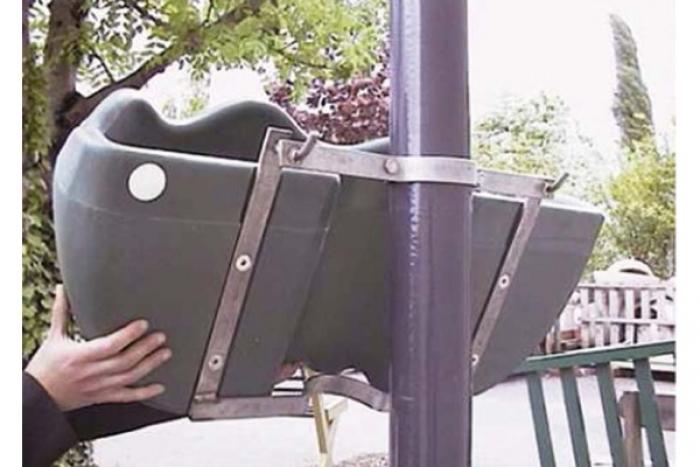
- Plastic flowerpots are used most often for decoration of squares, city entrances, roundabouts or as independent dominant features. They can be applied for street lighting poles, railings, bridge structures, house facades, etc.
- Pots are made from high density polyethylene by rotary method which ensures their high mechanic impact resistance, shape stability during temperatures from -65 °C up to 85 °C. Material coloured throughout ensures colour stability, anti graffiti finish resistance to vandalism.
- Container double-cased version reduces evaporation of water, reduces watering requirement almost to one half and this way it decreases maintenance costs. Water reserve is created between walls of the containers which is used little by little for gradual irrigation. Flowerpots are equipped with overflow holes for excess water outflow and holes for reserve water discharge
- Plastic flowerpots are used most often for decoration of squares, city entrances, roundabouts or as independent dominant features. They can be applied for street lighting poles, railings, bridge structures, house facades, etc.
- Pots are made from high density polyethylene by rotary method which ensures their high mechanic impact resistance, shape stability during temperatures from -65 °C up to 85 °C. Material coloured throughout ensures colour stability, anti graffiti finish resistance to vandalism.
- Container double-cased version reduces evaporation of water, reduces watering requirement almost to one half and this way it decreases maintenance costs. Water reserve is created between walls of the containers which is used little by little for gradual irrigation. Flowerpots are equipped with overflow holes for excess water outflow and holes for reserve water discharge
This item is in the category City flower pots
Request information about this article
Add a comment

